
Bio-Individuality Beyond Nutrition: Grass Jelly, Hakka Food Culture, and Ancestral Recognition
Bio-individuality is usually discussed in terms of genetics, metabolism, lifestyle, and environment. In my work, I also place it within ancestry: not as doctrine, and not as biological determinism, but as recognition.
What does the body know before the mind has conceptualised it?
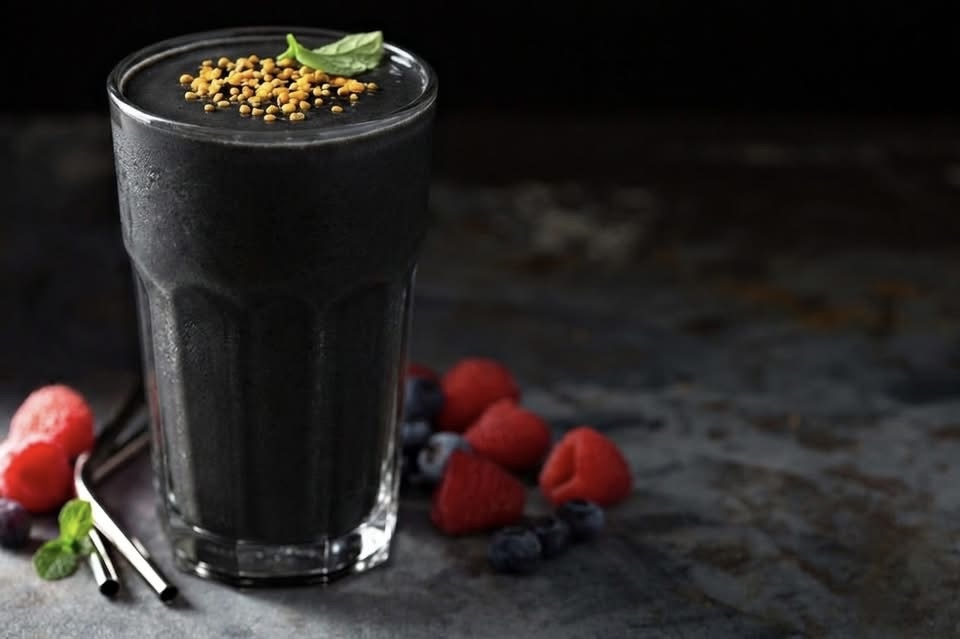
As the weather warms, I find myself returning more frequently to grass jelly, or xian cao. Rather than taking it in milk tea or cubed as dessert, I have been adding it to smoothies. It belongs to the mint family and, through its natural viscosity, gives them a smooth, lightly gelatinous texture while retaining a faint herbal bitterness and a cooling quality suited to the season.
Grass jelly is closely associated with Hakka food culture. The Hakka are a Han Chinese subgroup shaped by migration, adaptation, and a practical food-as-therapy intelligence: shi liao (食疗), the understanding that food and medicine are not separate.
Hakka is one of the Chinese streams of lineage I carry.
Another stream carries a different imprint: late-imperial Han culture, with its social structure, aesthetic discipline, and family memory of foot-binding. One stream evokes Hakka women: strong, mobile, practical, and physically central to survival. Another evokes lotus-feet women: constrained, refined, and formed by a very different grammar of femininity and status.
Both are Chinese. Both are ancestral. Both live in the body differently.
My Chinese ancestry also includes broader Han inheritance, Confucian moral and familial traditions, Chinese Buddhist and Daoist syncretic worlds, food-therapy lineages, and older ritual and healing traditions within Chinese culture.
So when I eat grass jelly, I recognise which stream it speaks to.
Not nostalgia, but bodily and energetic recognition.
In my practice, nutrition is only one register of food. Certain foods carry ancestral patterns: climates endured, plants gathered, remedies repeated, gestures practised, tastes remembered across generations. The body is more porous to inheritance than modern dietetics permits.
Some foods nourish through connection to ancestry, climate, memory, and older forms of recognition.
What foods make you feel connected to your ancestors?
Note: Shi liao (食疗) refers to Chinese food therapy, the traditional understanding that food and medicine belong to a continuous field of care.